Finding Peace Within Chaos

Finding Peace Within Chaos

Finding Peace Within Chaos

A grounded reflection on navigating life’s chaos through awareness, presence, and reconnecting with your whole self.

There are times in life where everything feels like a lot.

Too many thoughts.
Too many responsibilities.
Too much happening all at once.

And even when nothing looks “wrong” from the outside…internally, it can feel overwhelming.

When Life Feels Full

There are periods where life naturally becomes busy.

Things need your attention.
Decisions need to be made.
You’re showing up in different areas of your life, trying to hold it all together.

From the outside, it can look like you’re managing.

But internally, it can feel like you’re constantly catching up…
never quite landing.

The Search for Peace

In these moments, it’s natural to want things to slow down.

To feel calmer.
Clearer.
More in control.

But often, the more we try to create peace externally,
the more we notice how unsettled things feel internally.

What Chaos Really Is

Chaos isn’t always about what’s happening around you.

Often, it’s what’s happening within.

A busy mind.
Unprocessed emotions.
Tension held in the body.
Energy moving without awareness.

All of it interacting at once.

 The Shift

Peace doesn’t come from everything becoming quiet.

It comes from becoming aware within the noise.

Noticing your thoughts without getting pulled into them.
Feeling your emotions without needing to push them away.
Allowing your body to soften, even slightly.

This is where something begins to change.

Small Moments Matter

It doesn’t require a complete reset.

It can begin in small, simple moments:

  • pausing between tasks
  • taking one conscious breath
  • noticing how you actually feel
  • allowing yourself to slow down, even briefly

These moments don’t remove the chaos…
but they change your relationship to it.

Returning to Yourself

When you begin to bring awareness to your internal state,
your whole system starts to respond.

The body may soften.
The nervous system may settle.
The mind becomes less reactive.

But more importantly,
you begin to feel more present within yourself.

A Different Kind of Peace

Peace isn’t always stillness.

Sometimes, it’s simply the ability to be with what is —
without resistance, without overwhelm, without needing everything to change.

A Gentle Reflection

You don’t need to have everything figured out to feel more at ease.

You don’t need life to be perfect to feel more present.

Sometimes, the shift begins with something much simpler…

A Quiet Invitation

Pause.
Notice what’s here.
Be honest with yourself.

From that place, things begin to settle in their own way.

If you feel ready to explore this more deeply, you can move into the sessions space when it feels right.

Kimley

Leave a comment below

More to Read!

Meditation as a Foundational Practice

Meditation as a Foundational Practice

Meditation as a Foundational Practice

The Practice of Meditation.

Meditation is one of the most consistent practices found across spiritual traditions, not because it is complex, but because it works.

It brings attention back to something most people have lost connection with — direct awareness of their own inner experience.

In everyday life, attention is constantly pulled outward. Thought leads to thought, reaction follows reaction, and over time this becomes the default way of moving through the world.

Meditation interrupts that pattern.

Not by stopping the mind, but by changing your position in relation to it.

When you sit and bring your attention to something simple — the breath, the body, or even the space around you — you begin to notice how active the mind actually is. Thoughts arise quickly, often without invitation, and just as quickly pull attention away.

This is where the practice begins.

Each time you notice that attention has moved and gently bring it back, you are training awareness. That repetition is what builds the practice.

Over time, something starts to shift.

You are still thinking, still feeling, still experiencing — but there is more space around it. Less immediate reaction. More ability to stay present with what is actually happening.

This has a direct effect on the nervous system, emotional processing, and how you respond to daily life.

Meditation becomes less about sitting still, and more about how you meet experience.

 PRACTICE

Start simply.

Sit in a way that feels stable. You don’t need a perfect posture, just something you can maintain without strain.

Bring your attention to your breath.

Not controlling it — just noticing it.

The movement of inhale and exhale. The feeling of air. The rhythm as it is.

Your attention will move. That is part of the process.

When you notice it has shifted into thought, gently return it to the breath.

No frustration. No judgment. Just repetition.

Even a few minutes of this, done consistently, begins to change how attention behaves.

 INTEGRATION

Meditation is not separate from life.

The same awareness you practice while sitting becomes available in everyday moments — in conversation, in stress, in decision-making.

You begin to recognise when you are reacting automatically, and when you are actually present.

That difference is where change happens.

 WHY THIS MATTERS

Without awareness, most patterns run unconsciously.

Meditation builds the capacity to see those patterns as they are happening.

From there, you have choice.

And that is where the practice becomes meaningful.

Kimley

Leave a comment below

More to Read!

Chakra Awareness & I Am Practice

Chakra Awareness & I Am Practice

Chakra Awareness & I Am Practice

Energetic Framework for Awareness & Embodied Integration

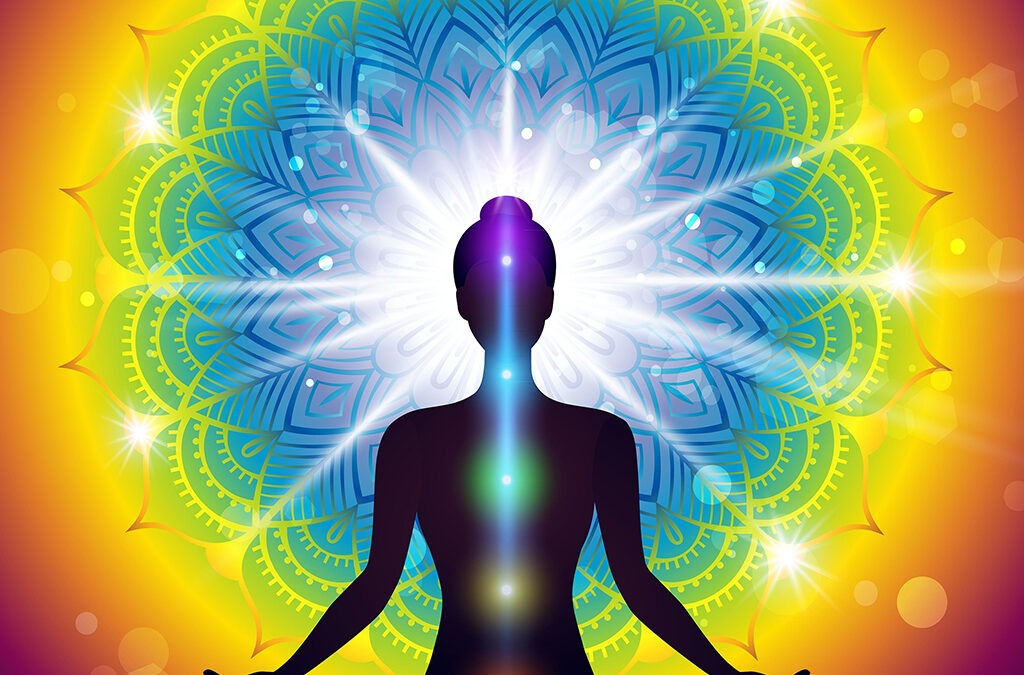
Chakra awareness is a framework for understanding how life force moves through the human system. It reflects patterns of physical sensation, emotional experience, mental activity, and intuitive perception as one continuous field of awareness.

Each chakra represents a functional centre within this system:

  • Root — grounding, stability, physical presence
  • Sacral — emotional flow, creativity, relational experience
  • Solar Plexus — personal direction, internal strength
  • Heart — connection, emotional openness
  • Throat — expression and communication
  • Third Eye — perception and inner awareness
  • Crown — expanded awareness beyond individual identity

These centres are not separate systems. They function together as an integrated energetic field.

Chakra awareness is the practice of observing how these patterns appear in lived experience, without needing to immediately change or interpret them.

I AM PRACTICE (INTEGRATION LAYER)

Alongside chakra awareness, simple I AM statements can be used as a way of bringing energetic understanding into direct, embodied experience.

Rather than describing states to achieve, the I AM Practice uses present-tense awareness to support integration of what is already being observed.

I AM FIELD

  • I am grounded
  • I am abundant
  • I am strong
  • I am love
  • I am truth
  • I am awake
  • I am connected

These statements are not affirmations in the traditional sense. They are anchors for attention that support a shift from mental understanding into embodied awareness.

They can be used after meditation or chakra observation to help integrate experience rather than analyse it.

HOW THEY WORK TOGETHER

Chakra awareness develops the ability to recognise energetic patterns within the system.

The I AM Practice supports integration of that awareness into present-moment embodiment.

Together, they create a simple two-layer process:

  • Observation (Chakra Awareness) → noticing how energy moves
  • Integration (I AM Practice) → embodying awareness through identity-based presence

This supports a shift from conceptual understanding into lived experience.

PRACTICAL USE

This practice can be used in a very simple way:

  1. Sit and observe internal experience through chakra awareness
  2. Notice where attention, sensation, or emotion is present
  3. Gently return awareness to the system as a whole
  4. Use the I AM Field to stabilise and integrate attention

Even a few minutes of this process can support greater clarity, grounding, and coherence.

FUNCTION OF THIS PRACTICE

Chakra Awareness & I AM Practice supports:

  • awareness of internal energetic patterns
  • emotional and nervous system regulation
  • clarity of perception
  • embodied presence
  • integration of awareness into lived experience

FINAL NOTE

This is not about achieving a particular state.

It is about developing a clearer relationship with awareness itself — and learning to recognise how energy, attention, and identity interact in real time.


 Kimley

Leave a comment below

More to Read!

Sacred Space

Sacred Space

Sacred Space

PRACTICAL & ENERGETIC ALIGNMENT

Creating sacred space is the intentional practice of shaping your environment and attention to support clarity, presence, and energetic coherence.

It applies both externally and internally — through the physical space you inhabit and the state of awareness you bring into it.

Externally, sacred space relates to the organisation and quality of your environment. This includes how space is arranged, how sensory input is managed, and how distraction or overstimulation is reduced.

Internally, it relates to the state of attention you bring into that environment. When attention is scattered, experience feels fragmented. When attention is present, perception becomes clearer and more stable.

Sacred space begins with awareness of this difference.

PRACTICAL APPLICATION

Creating sacred space can begin with simple physical actions:

  • clearing unnecessary clutter
  • creating open, breathable environments
  • reducing visual or sensory noise
  • introducing elements that support calm and focus

These actions are not symbolic — they directly influence how the nervous system and attention respond to space.

The environment and the internal state continually interact.

When the external space is clear, it becomes easier for the internal system to settle. When the internal system is settled, perception of space becomes more coherent.

ENERGY & ATTENTION

Beyond physical organisation, sacred space is fundamentally an attention-based practice.

Before entering a space or beginning an activity, pausing for even a brief moment shifts the quality of engagement. Attention moves from automatic reaction into conscious presence.

This can be as simple as:

  • noticing the breath
  • grounding awareness into the body
  • becoming aware of the space before engaging with it

These small shifts alter the energetic tone of experience.

Over time, this builds a more conscious relationship between internal state and external environment.

INNER SACRED SPACE

Sacred space is not limited to physical environment.

It is also the ability to create internal space — moments of pause within thought, emotional reactivity, or sensory input.

This internal space is developed through repeated awareness. Each time attention is brought back from distraction into presence, internal space is strengthened.

This supports:

  • emotional regulation
  • clearer decision-making
  • reduced reactivity
  • increased presence in daily life

INTEGRATION

Sacred space becomes a lived practice when it is applied consistently in both environment and awareness.

It supports the other foundational tools in this system:

  • Meditation strengthens attention and presence
  • Chakra awareness develops energetic literacy
  • Sacred space stabilises both internal and external environments

Together, they form a practical framework for energetic awareness and internal alignment.

FUNCTION

Sacred space is used to:

  • support nervous system regulation through environment
  • reduce energetic and sensory overload
  • increase clarity and presence
  • strengthen awareness of internal–external interaction
  • create conditions that support deeper practice and wellbeing

It is a foundational tool for maintaining coherence in daily life, not only during intentional practice.

 Kimley

Leave a comment below

More to Read!